Written by Travel writer and former extended-stay guest at Two Creeks Crossing Resort, creating practical guides grounded in firsthand experience. |
For RV camping near Houston, TX, start by matching the campsite to your rig. A full-hookup site provides water, electricity, and sewer at the site. A partial-hookup site provides some of those services. A dry site provides no utility hookups, so you depend on your RV’s stored water, batteries, and other permitted equipment.
That distinction affects everything from air-conditioning use to checkout. Before comparing scenery or amenities, confirm that the site fits your RV’s length, electrical connection, and parking needs. Then choose the location that suits the way you want to spend the weekend.
What the different hookup types mean
| Site type | Services to expect | What to plan before arrival |
|---|---|---|
| Full hookup | Water, electricity, and sewer connections | Correct cords and hoses, plus a site that fits the rig |
| Water and electric | Water and power; no individual sewer connection | Tank capacity and the location and access rules of a dump station |
| Electric only | Power, with water and waste arrangements elsewhere | Fill-up location and tank management |
| Dry camping | No utility hookups at the site | Fresh water, battery use, waste storage, and permitted power sources |
Read the site’s actual description. A campground can offer several categories, and a property with a dump station does not necessarily have sewer connections at every campsite.
How to compare full-hookup RV sites near Houston
Ask for the site’s maximum RV length and usable space, then describe your entire setup. A long fifth wheel, a motorhome towing a car, and a travel trailer with a pickup have different parking needs even if the RV lengths look similar.
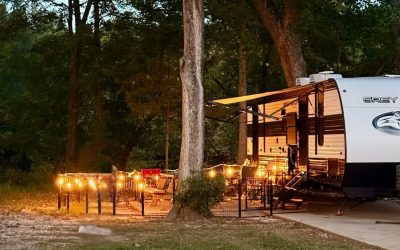
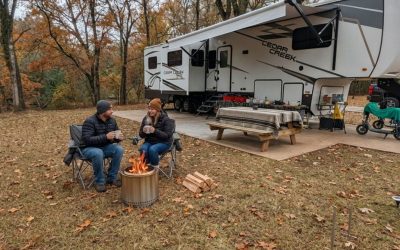
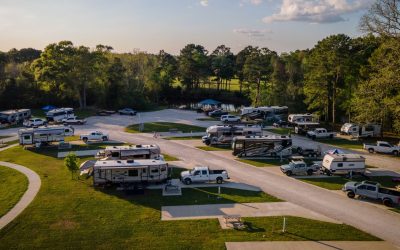
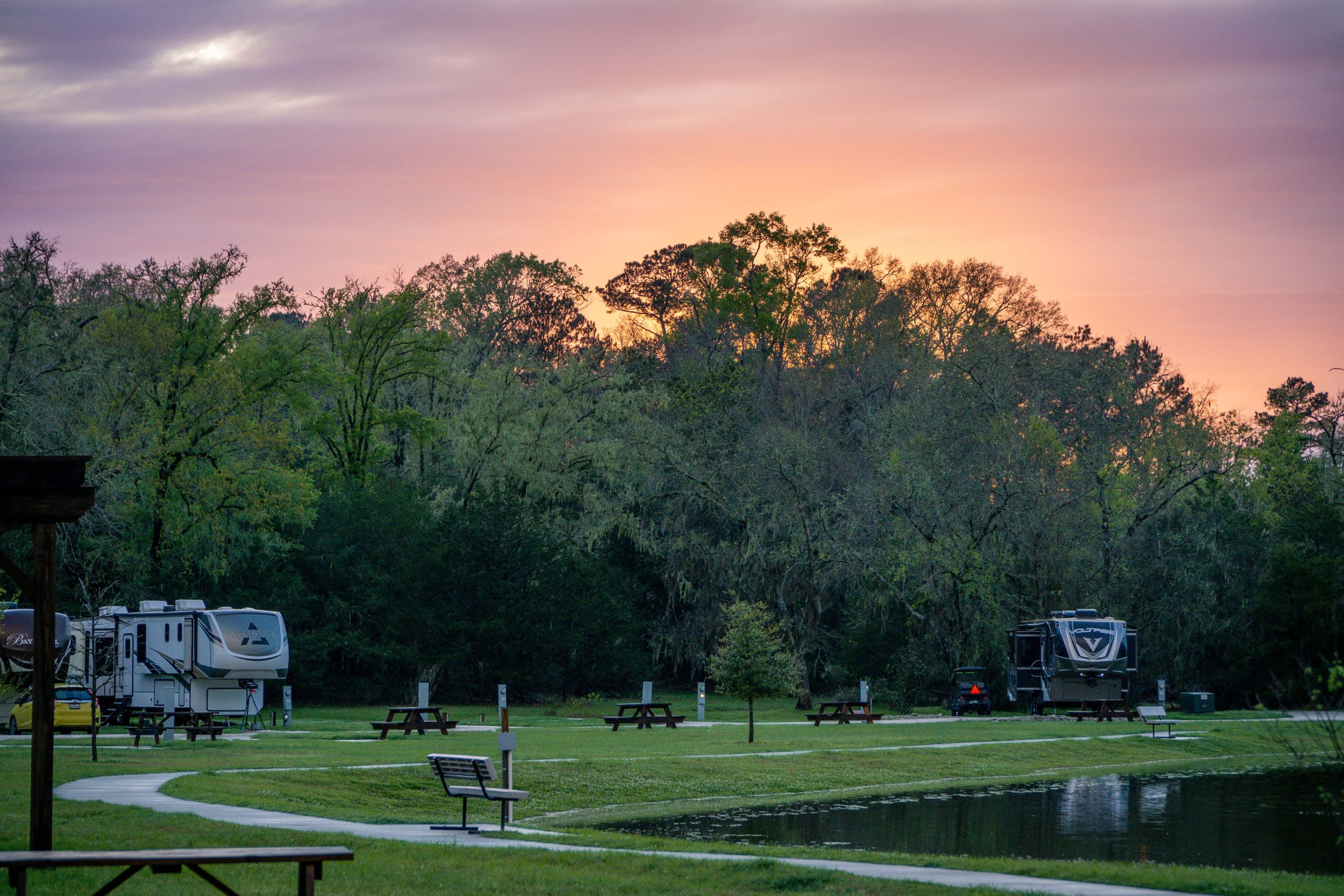
Two Creeks Crossing Resort offers concrete-pad RV sites with full hookups, including water, sewer, and 30/50-amp service. Pull-through and back-in options serve different arrival preferences. Explore the Lake Livingston RV sites and choose the category that fits your equipment.
Treat waterfront, waterview, covered, and accessible sites as specific reservation choices. Do not assume a general RV reservation will include a particular view, cover, or accessibility feature.
30-amp vs. 50-amp RV sites
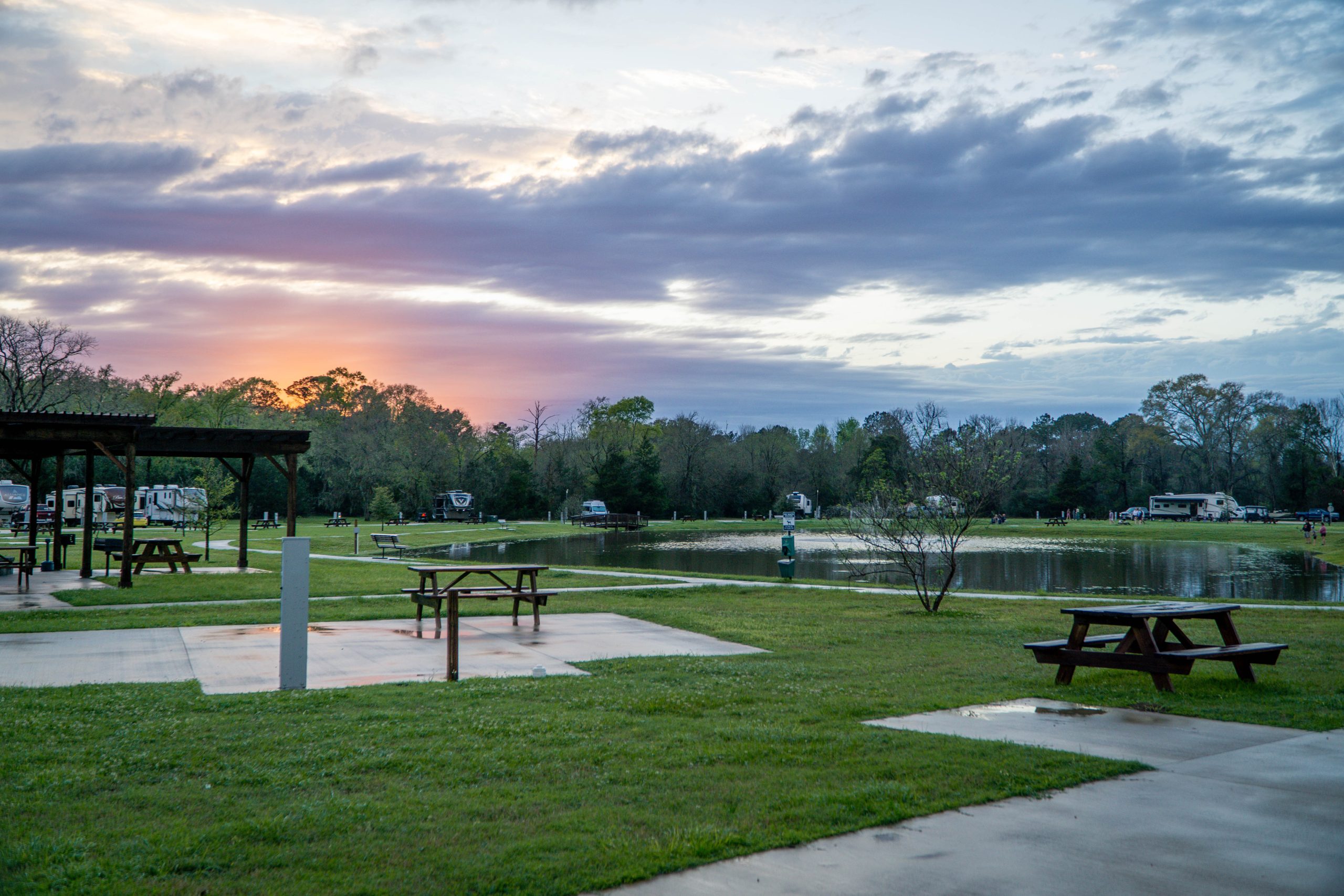
Your RV’s electrical system determines which connection it is designed to use. A 50-amp setup can support a larger combined electrical load than a 30-amp setup, which matters for RVs with multiple air conditioners or several appliances running together.
An appropriate adapter can help connect compatible equipment, but it does not increase the power available from the pedestal. If your RV is using a lower-capacity connection, manage the load and follow the RV manufacturer’s instructions. Confirm the pedestal service before booking rather than relying on an adapter to solve every mismatch.
Bring the correct shore-power cord and any compatible protection equipment you use. Inspect the connection before plugging in, and ask campground staff for help if the pedestal appears damaged or the service does not match the reservation.
Pull-through or back-in?
A pull-through site can make arrival simpler, especially if you are new to positioning a trailer or arrive with a long setup. A back-in site may suit you just as well if the pad is large enough and you are comfortable maneuvering.
Ask about slide-out clearance, the distance to hookups, and where the tow vehicle or additional car must park. Before leveling, check the usable space on both sides, the sewer hose route, and the position of the door and awning. A few extra minutes before disconnecting can prevent a second round of moving the rig.
What to bring for a weekend RV stay
Pack the equipment that supports your RV’s actual setup:
- A drinking-water-safe hose and any compatible water-pressure regulator you use.
- A sewer hose, required fittings, and supplies for keeping wastewater equipment separate.
- The correct power cord and compatible adapters or electrical protection equipment.
- Leveling equipment, wheel chocks, and a flashlight for arrival.
- Basic tools, gloves, and a checklist for connections and departure.
- Your reservation details and the campground’s arrival instructions.
Check the reach of your hoses and cord against the site description when possible. A convenient-looking site can still require a longer connection than your usual setup.
What changes when you book a dry site?
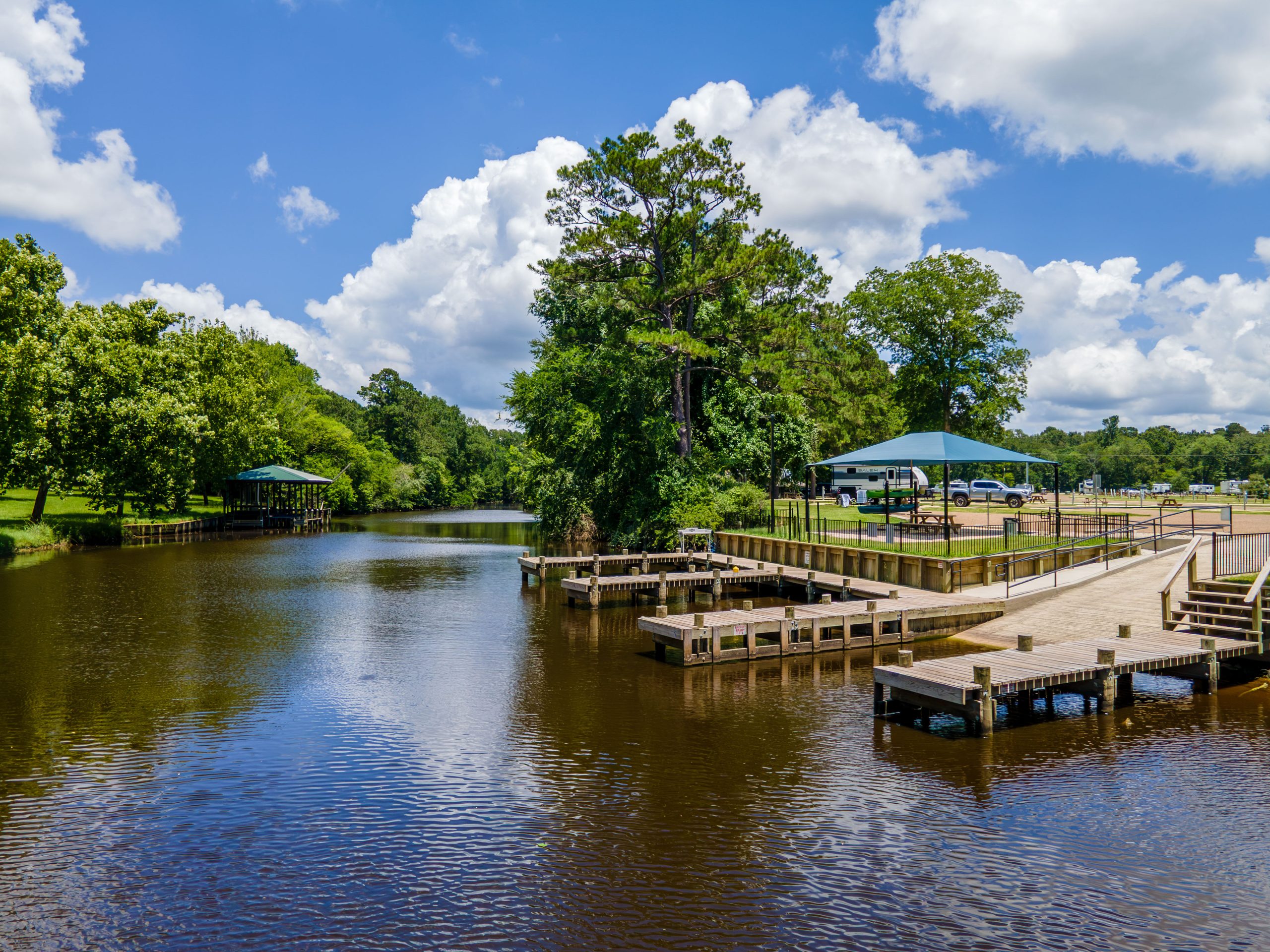
Dry camping rewards careful planning. Fill your fresh-water tank where allowed, estimate your battery use, and know how much wastewater your tanks can hold. Hot weather can make power planning more important, particularly if air conditioning is essential to your comfort.
Ask whether generators are permitted and when they may run. Do not assume a dry site allows a generator, and do not assume nearby bathrooms or a dump station are included. Confirm those facilities and access rules before choosing the site.
Two Creeks Crossing’s advertised RV offering is full-hookup camping. If you specifically want a dry campsite, compare properties that explicitly list that option rather than booking a full-hookup resort expecting a lower-cost dry-site category.
Compare the whole stay near Houston
Once the site fits, compare the drive, nightly rate, included guest count, vehicle parking, and activities. A cheaper campsite can be a good choice when you only need a place to sleep. A resort can make sense when your group wants enough recreation to spend most of the weekend on the property.
For a stay northeast of Houston, review the Houston-area RV resort overview alongside your travel plans. If you are still comparing properties, the guide to RV resorts near Houston, TX can help you organize the decision. Match the campground to your trip, not just to a nightly price.
Frequently asked questions
| Does full hookup mean you do not need a dump station? |
| You normally have a sewer connection at your site, but you still need to connect and manage your tanks correctly. Verify the campground’s requirements and follow your RV’s operating instructions. |
| Can a 50-amp RV use a 30-amp campsite? |
| A compatible adapter may allow a connection, but the available power remains limited by the service. Check your manufacturer’s guidance and manage appliances accordingly. |
| What should you confirm before booking RV camping near Houston? |
| Confirm rig fit, electrical service, water and sewer connections, parking, arrival time, and the exact site category. Add amenity hours and any special requests before completing the reservation. |